In recent months, businesses across different industries have started to re-evaluate the role of their websites. What was once viewed as a simple online presence is now being treated as a critical business tool that directly affects credibility, customer trust, and lead generation. As digital expectations continue to rise, companies are paying closer attention to whether their websites are actually supporting their goals or quietly holding them back.
Many existing business websites were built years ago using outdated approaches. These sites often focus more on visual appearance than usability and lack a clear structure that guides visitors toward meaningful actions. In today’s digital environment, visitors expect to quickly understand what a company offers, why it is trustworthy, and how to get in touch. When this information is not immediately clear, users tend to leave within seconds.
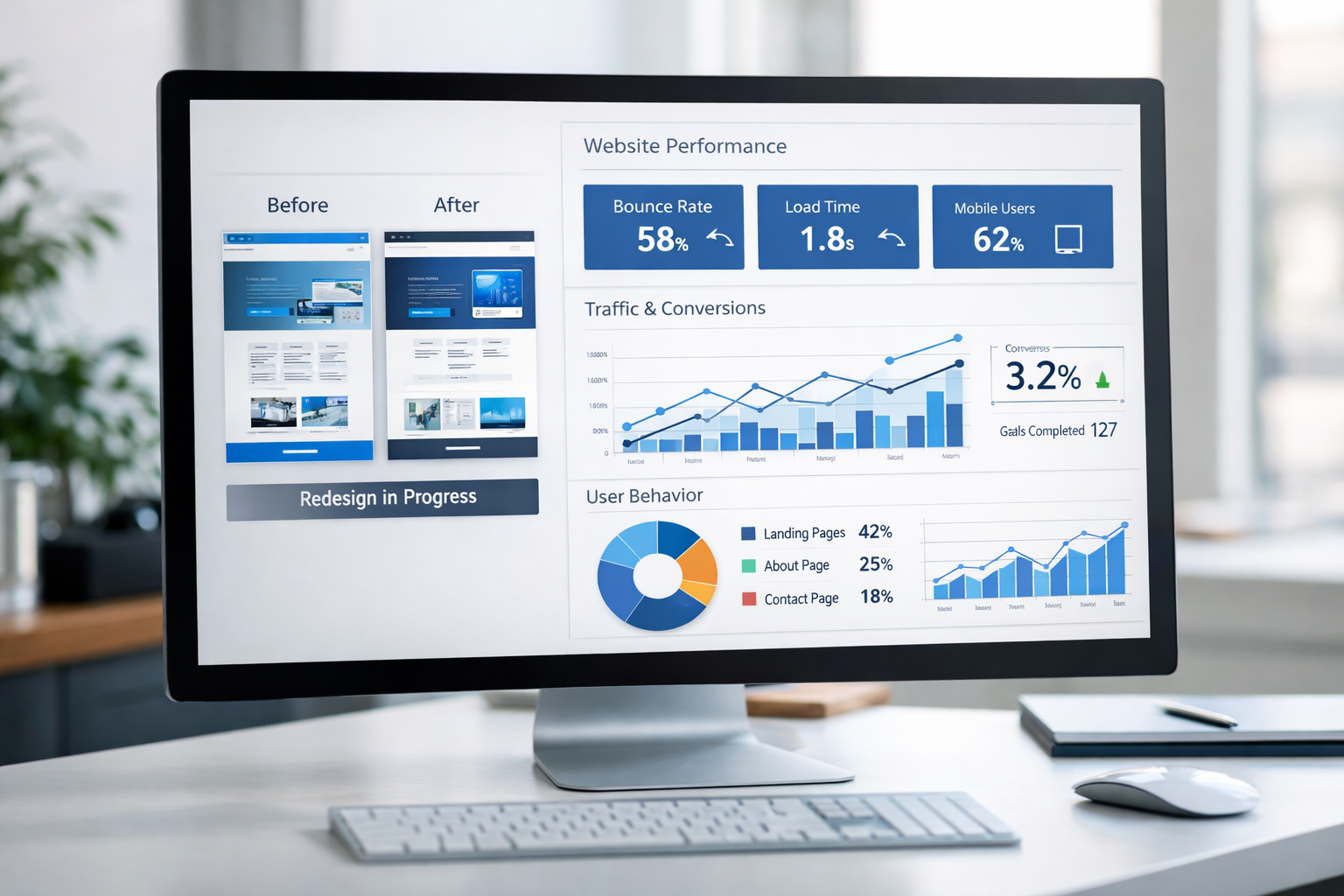
Mobile experience has become another major factor driving website reassessment. With the majority of users browsing on smartphones, websites that are slow, difficult to navigate, or poorly optimized for mobile screens are seeing higher bounce rates and lower engagement. As a result, businesses are increasingly prioritizing mobile-first design and performance improvements to meet modern user expectations.
Trust has also emerged as a decisive element in website effectiveness. Visitors now look for clear contact information, secure browsing, consistent branding, and evidence of real activity such as projects, clients, or testimonials. Websites that fail to establish trust early often struggle to convert visitors into inquiries, regardless of how much traffic they receive.
At the same time, businesses are realizing that traffic alone is no longer a meaningful indicator of success. While social media and digital advertising can drive visitors to a website, the real value lies in what happens after they arrive. Without clear calls to action, intuitive navigation, and a conversion-focused structure, increased traffic does not translate into real business results.
These shifts have led to a growing focus on performance-driven websites. Companies are moving away from static online brochures and toward platforms that are regularly reviewed, optimized, and aligned with business objectives. Websites are increasingly seen as active assets that require ongoing attention rather than one-time projects.
As digital standards continue to evolve, re-evaluating a business website is no longer optional. Organizations that treat their website as a living part of their operation are better positioned to build trust, engage users, and remain competitive in the years ahead.